

Bladder Cancer Treatment
in Chennai
Expert diagnosis and treatment of bladder cancer from cystoscopy and no-incision TURBT for early tumours to advanced reconstructive and robotic surgery with the structured surveillance that bladder cancer requires.
Understanding bladder cancer
Bladder cancer usually begins in the inner lining of the bladder and its most common early sign, painless blood in the urine, means it is often caught while it is highly treatable.
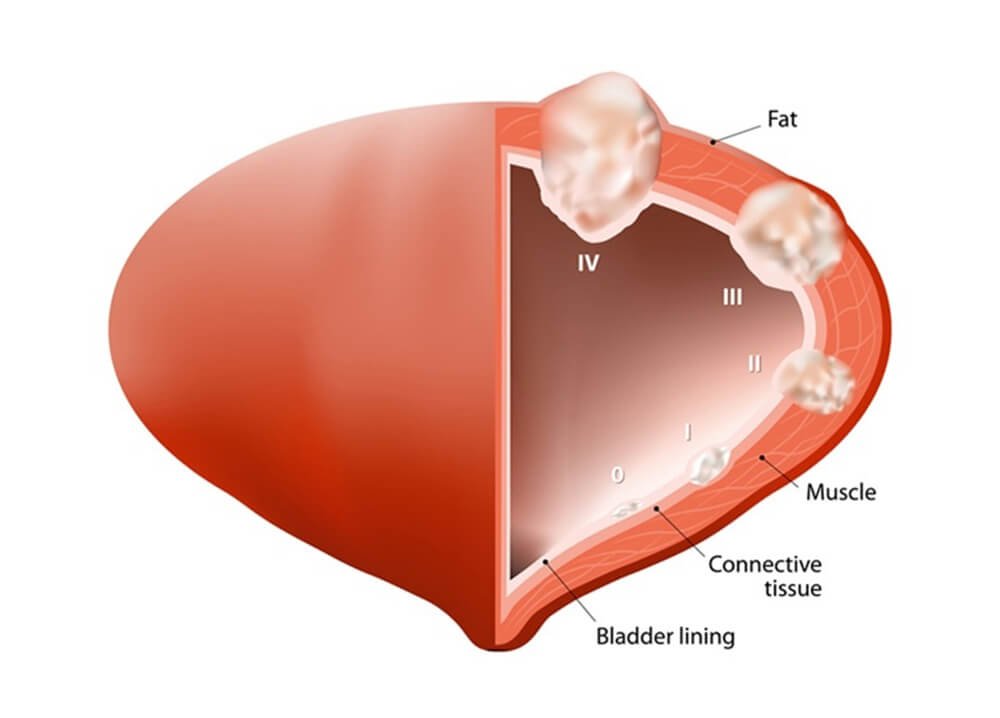
Most bladder cancers are urothelial (transitional cell) carcinoma, arising from the cells that line the bladder. Many are found early, while confined to the lining (non-muscle-invasive), when they can be treated through the urinary passage without an incision.
Bladder cancer is strongly linked to smoking, and it has a tendency to come back — so alongside treatment, regular surveillance to catch any recurrence early is a central part of good care.
Bladder Cancer Symptoms
Bladder cancer often shows itself early, most commonly through blood in the urine:
Blood in urine
Painless, visible blood is the most common sign it may come and go.
Urinary changes
Frequency, urgency or burning that can mimic a urinary infection.
Recurrent 'UTIs'
Infections that keep returning or do not fully clear.
Advanced signs
Pelvic pain or other symptoms can occur if the cancer is more advanced.
Never ignore painless blood in urine
Painless visible blood in the urine is the classic early warning sign of bladder cancer. It should never be put down to a one-off or assumed to be an infection even a single episode warrants prompt evaluation, including a look inside the bladder (cystoscopy).
What raises the risk
Smoking
By far the biggest risk factor harmful chemicals concentrate in the urine.
Chemical exposure
Chronic irritation
Long-standing bladder infection, stones or irritation.
Age & sex
How Bladder Cancer is diagnosed
Urine tests & cytology
Urine routine confirms blood; culture excludes infection. Cytology examines urine for shed cancer cells helpful, especially for high-grade disease
Imaging- ultrasound and CT urogram
Ultrasound often directly reveals bladder tumours. A CT urogram provides a comprehensive map of the entire urinary lining kidneys, ureters, and bladder since urothelial cancer can develop anywhere along this pathway.
Cystoscopy
A slim camera inspects every part of the bladder lining under local anaesthesia in minutes. Small, flat tumours invisible to scans are seen directly no imaging can replace this step.
Resection & staging
Removes the tumour and provides tissue to confirm grade and stage.
How bladder cancer is treated
Treatment depends on whether the cancer is confined to the lining or has grown into the bladder muscle.
TURBT (through the passage)
For: all new bladder tumours · definitive for most Non muscle invasive bladder cancer(NMIBC)
Complete removal of the tumour through the natural passage under anaesthesia no incision. Both diagnosis and, for most non-muscle-invasive cancers, cure.
• No external cut; typically 1–2 days in hospital
• Deep resection including muscle provides accurate staging
• A single chemotherapy instillation after resection reduces recurrence
• Repeat TURBT for restaging in selected high-risk cases per guidelines
Intravesical therapy
For: intermediate & high-risk NMIBC after TURBT Medication instilled directly into the bladder via a small catheter targets residual cancer cells in the lining and reduces recurrence and progression.
- BCG immunotherapy is administered weekly, followed by maintenance sessions, typically on an outpatient basis.
- Alternatives like Mitomycin and other agents may be used when suitable.
- The treatment involves holding the medication in the bladder for a specified period before voiding.
- If recurrence occurs despite adequate BCG treatment, it prompts a reevaluation
Cystectomy & reconstruction
For: muscle-invasive disease · BCG-unresponsive high-risk NMIBC
Removal of the bladder with surrounding lymph nodes the standard curative operation for muscle-invasive cancer. Urine is diverted using a segment of intestine.
• Ileal conduit reliable, simplest recovery, small external pouch
• Neobladder internal reservoir allowing natural-passage voiding in suitable patients
• Minimally invasive/robotic approaches employed where appropriate
• Diversion choice made together, before surgery, with full explanationFor: muscle-invasive disease · BCG-unresponsive high-risk NMIBC.
• Removal of the bladder with surrounding lymph nodes the standard curative operation for muscle-invasive cancer. Urine is diverted using a segment of intestine.
• Ileal conduit reliable, simplest recovery, small external pouch
• Neobladder internal reservoir allowing natural-passage voiding in suitable patients
• Minimally invasive/robotic approaches employed where appropriate
• Diversion choice made together, before surgery, with full explanation
Systemic therapy
For: selected MIBC · advanced disease
Guideline-endorsed alternatives and additions to surgery, planned in multidisciplinary discussion.
- Trimodal therapy maximal TURBT plus chemoradiation keeps the bladder in selected patients
- Chemotherapy before cystectomy improves survival in eligible patients
- Immunotherapy and newer agents for advanced and metastatic disease
Surveillance matters
Regular follow-up
Because non-muscle-invasive bladder cancer can recur, a schedule of follow-up cystoscopies is an essential part of care. This surveillance detects any return early, when it is simplest to treat, and gives lasting peace of mind.
Expert bladder cancer care in Chennai
Dr. A.K. Jayaraj is a Senior Consultant Urologist and Uro-Oncologist in Chennai who diagnoses and treats bladder cancer — from cystoscopy and TURBT for early tumours to major reconstructive and robotic surgery for muscle-invasive disease.
His care combines prompt, thorough evaluation of blood in the urine with structured surveillance, so that bladder cancer is caught early and managed for the long term.
- Cystoscopy & TURBT
- Uro-oncology specialist
- Robotic & reconstructive surgery
- 20+ years of surgical experience

Frequently asked questions
The most common and important sign is blood in the urine often visible, painless and intermittent (it may come and go). Because it can appear once and then seem to settle, it is easy to dismiss. However, even a single episode of painless, visible blood in the urine should always be evaluated by a urologist, as it can be the earliest sign of bladder cancer.
When bladder cancer is detected early and confined to the inner lining (non-muscle-invasive), it is often highly treatable and can usually be removed through the urinary passage, with medicines placed in the bladder to lower the chance of it returning. More advanced, muscle- invasive disease requires more extensive treatment. The outlook depends on the stage and grade, which is why early diagnosis matters
Non-muscle-invasive bladder cancer has a tendency to recur, which is why regular follow-up with cystoscopy (a check of the bladder lining) is an important part of care. This surveillance catches any recurrence early, when it is easiest to treat.Non-muscle-invasive bladder cancer has a tendency to recur, which is why regular follow-up with cystoscopy (a check of the bladder lining) is an important part of care. This surveillance catches any recurrence early, when it is easiest to treat.
Yes smoking is the single biggest risk factor for bladder cancer, because harmful chemicals are filtered into the urine and concentrated against the bladder lining. Stopping smoking lowers the risk and is strongly encouraged, including after a diagnosis.
Risk falls after quitting but declines slowly, so former smokers should still take any blood in the urine seriously. For patients already treated, quitting measurably reduces recurrence risk it is never too late to stop and help.
Essentially yes BCG, in a treatment formulation, is instilled into the bladder via a small catheter after tumour removal for intermediate- and high-risk non-muscle-invasive cancer. It provokes an immune attack on cancer cells in the lining, significantly reducing recurrence and progression. It is given as weekly outpatient instillations, followed by maintenance doses.
Cystoscopy is a look inside the bladder using a fine flexible camera passed through the urethra, usually under local anaesthetic it is the key test for bladder cancer. TURBT (transurethral resection of bladder tumour) both removes a bladder tumour and provides tissue to confirm the diagnosis and stage, all through the natural passage with no external cut.
Bladder cancer has a known tendency to recur new tumours can appear elsewhere in the lining months or years later. Recurrences detected on scheduled cystoscopy are usually small and easily treated; those left to announce themselves may not be. Surveillance cystoscopy at guideline intervals is part of treatment, not an optional extra.
Related conditions & treatments
Hematuria (Blood in Urine)
The key symptom →
Kidney Cancer
Uro-oncology →
Prostate Cancer
Uro-oncology →
Robotic Surgery
Cancer surgery →
Urinary Tract Infection
Similar symptoms →
Dr. A.K. Jayaraj
Credentials →
Blood in your urine? Book an evaluation
Painless blood in the urine should always be checked. Bring any urine tests or scans for a prompt assessment, including cystoscopy if needed.