

UTI Treatment
in Chennai
Effective treatment for urinary tract infections clearing the infection and, for recurrent or complicated UTIs, finding and fixing the underlying cause such as a stone or an enlarged prostate.
Understanding urinary tract infections
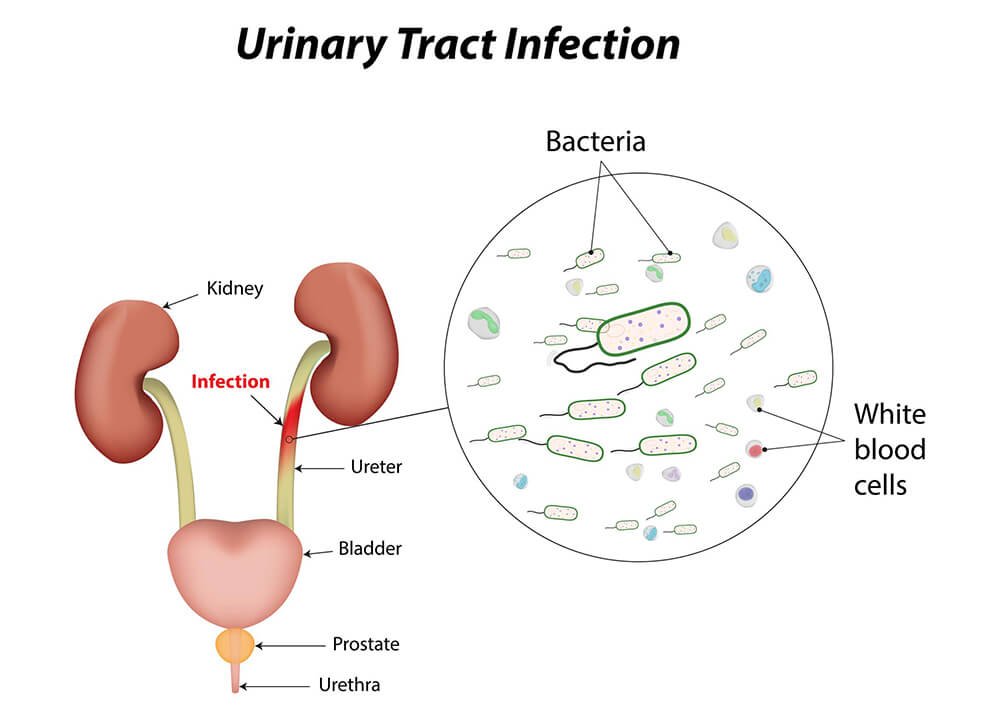
A urinary tract infection (UTI) happens when bacteria enter and multiply in the urinary tract most often the bladder, causing burning and frequent urination.
Simple bladder infections are very common and usually settle quickly with the right treatment. But UTIs that keep coming back, occur in men, or reach the kidney deserve a closer look, because they can point to an underlying problem such as a stone, an enlarged prostate or incomplete bladder emptying.
A urologist can both treat the infection and find and fix the cause breaking the cycle of recurrent infections.
Symptoms of a UTI
Bladder infections (the most common UTI) typically cause:
Burning on urination
Pain or a burning feeling when passing urine.
Frequency & urgency
Needing to pass urine often, with a sudden or strong urge.
Cloudy or strong urine
Cloudy, dark or strong-smelling urine, sometimes with blood.
Lower tummy discomfort
A dragging discomfort in the lower abdomen or pelvis.
When it is more serious
If a UTI reaches the kidney you may develop a high fever, chills, flank or back pain, nausea and feel generally unwell. This needs prompt medical attention. Blood in the urine or a UTI in a man should always be assessed by a urologist.
What causes UTIs
Bacteria
Most UTIs are caused by bacteria (commonly E. coli) entering the urinary tract.
Incomplete emptying
Anything that stops the bladder emptying fully an enlarged prostate, or nerve problems.
Stones & obstruction
Kidney or bladder stones and blockages let bacteria persist.
Other factors
Diabetes, dehydration, catheters and, in women, anatomy all play a part.
How a UTI is assessed
Urine routine examination
A quick test showing pus cells, red cells and bacteria confirms infection.
Urine culture and sensitivity
Confirms infection and identifies the bacteria and the appropriate antibiotic.
Cystoscopy
In selected cases, to inspect the bladder directly.
Blood tests
To assess kidney health and detect any signs of a more serious infection.
Ultrasound / CT
For recurrent or complicated infections, to look for stones or obstruction.
How UTIs are treated
Treatment clears the infection and, importantly, addresses the cause.
Culture-Guided Antibiotics
For the current infection
A short antibiotic course tailored to your urine culture clears most bladder infections in 3–7 days. Kidney infections require longer courses, sometimes starting with IV antibiotics in hospital. Right drug, right dose, right duration guided by culture
Complete the full course even after symptoms settle Plenty of fluids and symptom relief alongside.
Treating the Underlying Cause
For recurrent & complicated UTI
When evaluation identifies a foothold for bacteria, treating it breaks the cycle for good.
Stone removal laser RIRS, URS or mini PCNL
Laser prostate surgery for BPH with incomplete emptying
Urethral stricture treatment DVIU or urethroplasty Tight diabetes control in partnership with your physician
Prevention Strategies for Women
• For recurrent UTIS in women
• After ruling out structural causes, proven preventive options are tailored to your pattern.
• Behavioural measures hydration, timed voiding, and post-intercourse voiding
• Vaginal oestrogen after menopause, where appropriate
• Cranberry products and other non-antibiotic options in selected patients
• Low-dose preventive antibiotics only as a last resort, per guidelines
Special Situations
Pregnancy · Men · Catheters · Children
Some UTIs are never "simple" and follow their own rules.
Pregnancy even asymptomatic bacteriuria is treated
Men every UTI is evaluated for prostate, stone or stricture
Catheter-related catheter care reviewed and changed promptly
Children evaluated for reflux and structural causes
Everyday Production
Drink enough water
Keep urine pale yellow throughout the day dilute urine flushes out bacteria before they establish.
Don't hold urine
Void every 3–4 hours and take time to empty fully. Holding urine lets bacteria multiply.
Hygiene basics
Wipe front to back, urinate after intercourse, and avoid harsh soaps or douching in the genital area.
Control diabetes
Well-controlled blood sugar removes the fuel on which urinary bacteria thrive.
Cranberry & citrus
Cranberry products help selected women with recurrent UTIS; good hydration matters more than any single food.
Fix the foothold
If infections recur, get evaluated treating a stone, prostate or stricture prevents far more UTIs than any home remedy.
UTI care in Chennai
Where a stone, an enlarged prostate or obstruction is driving repeated infections, he can treat that too, with minimally invasive techniques.
- Recurrent & complicated UTI care
- Treats underlying causes
- Endourology-trained urologist
- 20+ years of surgical experience

Frequently asked questions
Recurrent UTIs can have an underlying cause worth looking for such as incomplete bladder emptying, a kidney or bladder stone, an enlarged prostate in men, diabetes, or not drinking enough. Finding and treating the cause is the key to stopping the cycle, alongside simple preventive measures.
UTIs are less common in men, so a UTI in a man should always be assessed by a urologist to look for a cause such as an enlarged prostate, a stone or obstruction. Any man with a UTI, or anyone with blood in the urine, fever with flank pain, or repeated infections, should be evaluated.
Most UTIs involve the bladder and are easily treated. But an untreated infection can travel up to the kidney (pyelonephritis), causing fever, flank pain and feeling unwell this is more serious and needs prompt treatment to protect the kidney.
Drinking enough water, not delaying passing urine, and treating any underlying cause (such as stones or an enlarged prostate) all help. For some people with frequent infections, a urologist may suggest specific preventive strategies after assessment.
Related conditions & treatments
Recurrent UTIs? Book a consultation
cause and stop the cycle. Bring any previous urine tests or scans.