

Enlarged Prostate (BPH) Treatment in Chennai
Expert assessment and treatment for an enlarged prostate from lifestyle measures and medication to minimally invasive laser prostate surgery (HoLEP) that relieves urinary symptoms with a durable result. BPH is benign, not cancer.
Understanding an enlarged prostate (BPH)
An enlarged prostate is one of the most common conditions in men as they age and, importantly, it is not cancer.
Benign Prostatic Hyperplasia (BPH) is a non-cancerous growth of the prostate, the small gland that surrounds the urethra just below the bladder. As the gland enlarges, it can squeeze the urethra and obstruct the flow of urine, producing the bothersome urinary symptoms so many men notice after the age of 50.
BPH does not cause prostate cancer and does not turn into it though the two can be present at the same time. With the right assessment, symptoms can almost always be improved, from simple measures and medication through to precise, minimally invasive laser surgery.
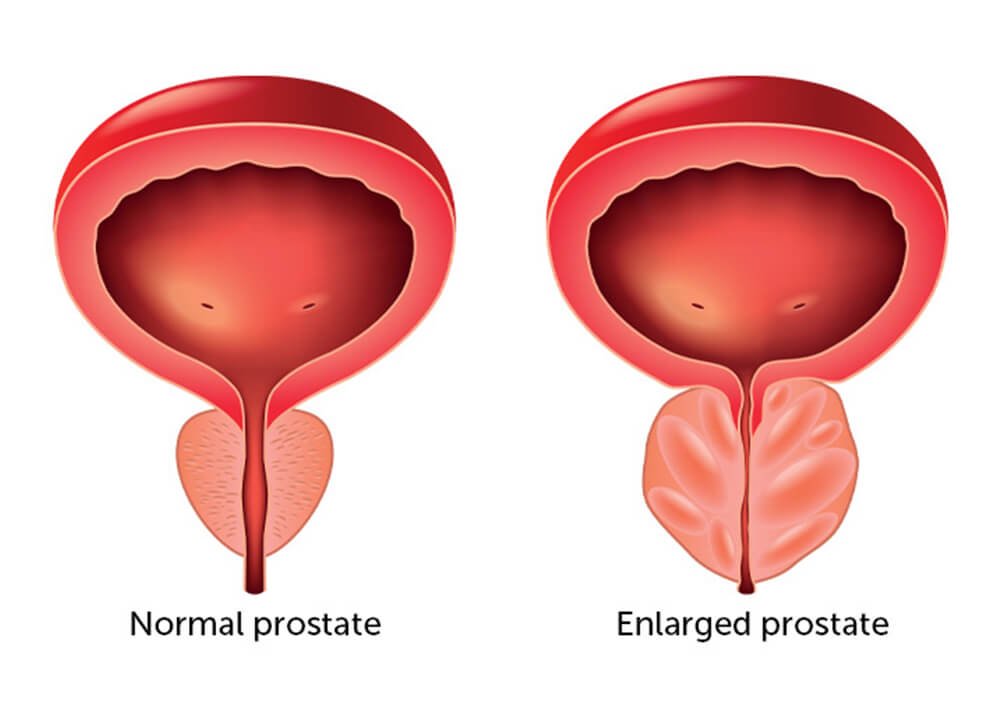
Symptoms of an Enlarged Prostate
BPH symptoms relate to storing and passing urine, and often develop slowly:
Weak stream
A slow or weak urine stream, straining, or a stream that starts and stops.
Frequency & urgency
Passing urine more often, a sudden urge, and getting up at night (nocturia).
Incomplete emptying
A feeling that the bladder has not fully emptied, with dribbling afterwards.
Hesitancy
Difficulty starting to pass urine even when the bladder feels full.
When to seek help sooner
See a urologist promptly if you are unable to pass urine at all, observe blood in your urine, or experience recurrent urinary infections these situations need immediate assessment. If urinary symptoms are interfering with your sleep or daily activities, an evaluation can determine the cause and the most straightforward, effective treatment.
How BPH is assessed
Symptom score
A simple questionnaire grades your symptoms and tracks improvement after treatment.
Uroflowmetry
Measures your urine flow rate and how completely the bladder empties.
Blood test
A PSA test is a screening test that helps exclude prostate cancer as a cause of symptoms.
Ultrasound
Assesses prostate size and the urine left behind after voiding.
How an enlarged prostate is treated
Treatment is tailored to how much the symptoms bother you — starting simple and stepping up only when needed.
Lifestyle & monitoring
Fluid timing, reducing caffeine and bladder training can help mild symptoms, with regular review.
Tablets
Alpha-blockers relax the prostate muscle; other medicines gradually shrink the gland. Combination therapy for larger prostates
Laser Prostate Surgery (HoLEP)
The minimally invasive, size-independent option that relieves the obstruction with little bleeding and a durable result.
TURP
The traditional trans-urethral resection, still an effective option in selected cases.
| Situation | What it means | Recommended approach |
|---|---|---|
|
Mild symptoms, low bother |
IPSS mild; no complications | Lifestyle measures + annual review |
|
Moderate symptoms |
Bothersome but no damage | Medication, reviewed for response |
|
Medication failure |
Symptoms persist or return on tablets | Laser prostate surgery / TURP |
|
Retention, stones, infections, blood |
Obstruction causing complications |
Surgery advised — tablets no longer enough |
|
Kidney effects |
Back-pressure changes on scan or creatinine rise | Timely surgery to protect kidney function |
Expert BPH care in Chennai
Dr. A.K. Jayaraj is a Senior Consultant Urologist in Chennai with specialised training in endourology, including laser prostate surgery. He focuses on relieving urinary symptoms with the least invasive effective option, and on giving men a clear, honest picture of their choices.
Where surgery is needed, his laser expertise means treatment that is precise, low-bleeding and durable — even for large prostates.
- Laser prostate surgery (HoLEP)
- Endourology-trained urologist
- Minimally invasive BPH care
- 20+ years of surgical experience

Enlarged prostate (BPH) FAQs
BPH is a benign (non-cancerous) enlargement of the prostate that does not develop into
prostate cancer. However, they can occur simultaneously, and both may cause urinary symptoms. Therefore, proper evaluation, including a PSA test when necessary, is essential for accurate diagnosis.
Treatment is guided by how much the symptoms affect your daily life, not by prostate size alone. Mild symptoms may require only lifestyle measures or monitoring. Medication helps many men. Surgery most often laser prostate surgery is considered when symptoms are bothersome despite medication, or when there are complications such as urinary retention, recurrent infections, bladder stones, or kidney function is affected
Laser enucleation (HoLEP) achieves the same goal as TURP relieving the obstruction but with less bleeding, and it works well for prostates of any size, including very large glands that once needed open surgery. It is durable, with a low chance of needing repeat treatment. The right choice for you is discussed at consultation.
Erections are usually preserved after modern BPH surgery. A common side effect is retrograde ejaculation (semen passing back into the bladder), which is harmless, does not affect erection or sensation, but can reduce fertility. This is explained fully beforehand so you can
decide with all the facts.
Many men live comfortably with mild BPH. But if significant obstruction is ignored, it can lead to recurrent urinary infections, bladder stones, a sudden inability to pass urine (acute retention) or, rarely, strain on the kidneys. Timely assessment prevents these problems.
Related conditions & treatments
Troubled by urinary symptoms? Book a consultation
Get a clear assessment of your prostate and the simplest effective way to relieve your
symptoms from medication to minimally invasive laser surgery.