

Prostate Cancer Treatment
in Chennai
Expert diagnosis and nerve-sparing robotic surgery for prostate cancer from PSA and MRI assessment to da Vinci Xi radical prostatectomy with a focus on cancer control and protecting quality of life.
Understanding prostate cancer
Prostate cancer is the second most common cancer in men and when found early, it is very often highly treatable.
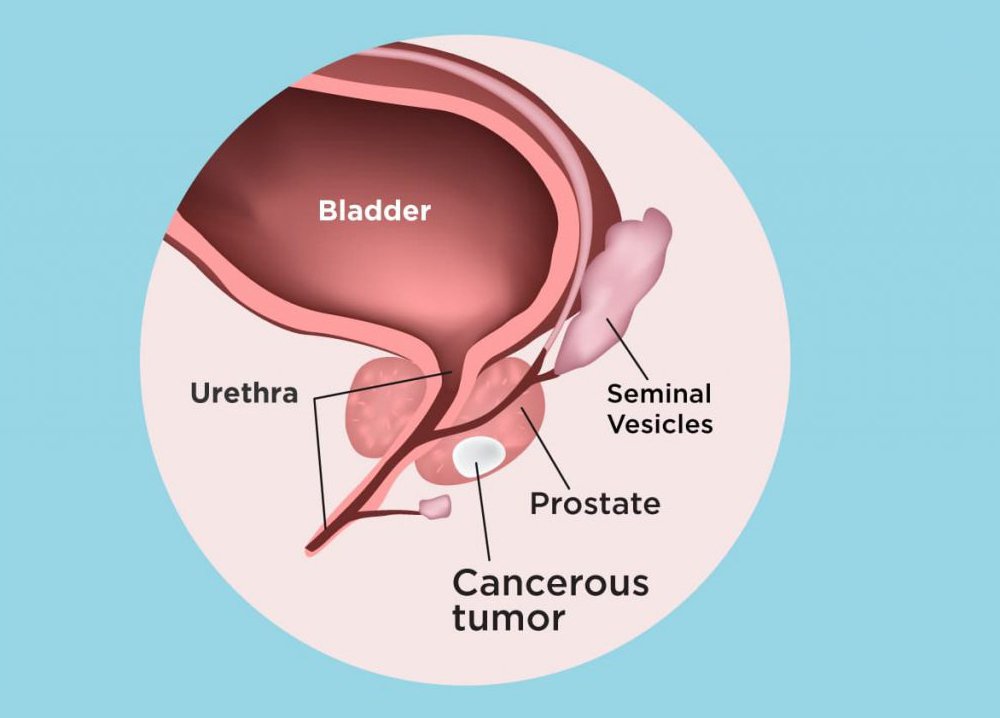
It develops in the prostate, the small gland that sits below the bladder and surrounds the urethra. Unlike benign enlargement (BPH), which grows in the inner gland and squeezes the urine passage, cancer usually arises in the outer gland, away from the urethra. That anatomical detail explains the single most important fact about this disease: early prostate cancer usually causes no symptoms.
Many prostate cancers grow slowly and may never cause harm, while others are more aggressive and require prompt treatment. Modern testing PSA, MRI and targeted biopsy increasingly helps us distinguish between them and match treatment to the cancer.
Because early prostate cancer usually causes no symptoms, awareness and timely PSA testing are key to detecting it when it is most curable.
Symptoms of prostate cancer
Early prostate cancer often has no symptoms. When present, they can include:
Urinary difficulty
A weak or interrupted stream, difficulty starting, or needing to pass urine more often, especially at night.
Urgency
A sudden or frequent urge to urinate.
Blood
Blood in the urine or semen, in some cases.
Advanced signs
Bone pain or unexplained weight loss can occur if the cancer has spread.
Why PSA testing matters
Most early, curable prostate cancers cause no symptoms at all. The urinary symptoms above are far more often due to a benign enlarged prostate (BPH) but they still deserve assessment. A simple PSA blood test, interpreted alongside an examination and MRI, is the key to early detection.
Who should get checked?
Guidelines support risk-based PSA discussions from age 50 for most men and from 45 for those with a family history of prostate cancer or a known BRCA mutation. One normal PSA is not a lifetime pass; your urologist will advise a re-test interval based on your level and risk.
What raises the risk?
Age
Risk rises with age, particularly after 50.
Family history
Genetics
Inherited changes such as BRCA can raise risk and aggressiveness.
Ethnicity
Prostate cancer is more common, and can be more aggressive, in some ethnic groups.
How prostate cancer is diagnosed
Blood test
PSA (prostate-specific antigen) serves as the initial marker. Its levels increase with cancer, but also with BPH, infection, and recent ejaculation. The interpretation considers the level, age, trend, and gland size alongside a digital rectal exam.
Prostate MRI
Modern practice involves imaging the prostate before biopsy. Multiparametric MRI detects suspicious regions using PI-RADS scores and can help avoid biopsy in men with reassuring findings.
Targeted biopsy
Tissue confirmation involves a biopsy targeting MRI-visible lesions. The pathologist then assigns a Gleason score or ISUP grade group, which is the most crucial indicator of the cancer's aggressiveness.
PET staging
PSMA PET-CT is used to determine if the cancer is limited to the gland, which influences all treatment choices.
How prostate cancer is treated
Treatment is tailored to your risk category, age and preferences from careful monitoring to
nerve-sparing robotic surgery.
Active surveillance
Best suited for low-risk, slow-growing cancers.
This approach involves structured monitoring with PSA tests, MRI scans, and periodic biopsies. Treatment is started only if there are signs of cancer progression.
This active management strategy prioritises close observation over neglect.
- It helps avoid or delay treatment-related side effects
- Guideline-recommended first option for low-risk cases.
- If disease parameters change, curative treatment remains a viable option.
Robotic Radical Prostatectomy
Ideal for: localised disease in healthy men aiming for complete removal.
Robot-assisted radical prostatectomy uses the da Vinci Xi with keyhole ports to remove the entire prostate, benefiting from magnified 3D vision that helps spare the sphincter and nerves, thereby helping maintain continence and erectile function when cancer location allows.
- Less blood loss, less pain, and shorter hospital stays compared to open surgery.
- Precise staging from the removed specimen guides follow-up
- Post-surgery, PSA levels become nearly undetectable, serving as a simple marker for monitoring recurrence.
Radiation therapy
Best suited for localised disease — offering a valid curative option.
External beam radiotherapy (often combined with short term hormone therapy) or brachytherapy targets the gland without requiring surgery.
- No surgery or anaesthesia required; administered as an outpatient treatment.
- Different side-effect profile, including bowel and urinary irritation, with erectile effects developing gradually.
- This option is discussed with every suitable man alongside surgery, as per guidelines.
Hormone & systemic therapy
Best for: advanced or metastatic disease
Prostate cancer is fueled by male hormones, and blocking these hormones can control even advanced disease for years.
- Hormone (androgen-deprivation) therapy is the foundational treatment.
- Newer agents and chemotherapy are incorporated based on disease stage and patient fitness.
- Treatment is managed by a multidisciplinary team, including medical oncology.
Expert prostate cancer care in Chennai
Dr. A.K. Jayaraj is a Senior Consultant Urologist, Uro-Oncologist and robotic surgeon in Chennai, specialising in nerve-sparing robotic radical prostatectomy on the da Vinci Xi. His focus is safe, complete cancer removal while protecting urinary control and sexual function wherever the cancer allows.
Every man receives a clear, guideline-based plan, an honest discussion of surgery versus the alternatives, and support through recovery.
- Nerve-sparing robotic prostatectomy
- Uro-oncology specialist
- da Vinci Xi robotic surgery
- 20+ years of surgical experience

Prostate cancer FAQs
Cancer identified while confined to the gland has very good long-term outcomes with modern treatment, making it one of the best among major cancers. Even when the cancer has spread, it can often be managed for years using hormonal therapies and newer treatments. The stage at which the cancer is detected is the most important factor, which is why a raised PSA should be evaluated promptly rather than delayed.
Yes this is the key point. Early-stage cancer develops in the outer part of the gland, away from the urine passage, and typically causes no symptoms. In older men, urinary problems are usually caused by benign enlargement. Early, treatable prostate cancer is identified through testing rather than waiting for symptoms.
Early, localised prostate cancer often shows no symptoms highlighting the importance of PSA testing. When symptoms occur, they might include a weak or interrupted urine flow, increased frequency of urination (particularly at night), difficulty initiating urination, or blood in urine or semen. While these symptoms are more frequently linked to benign prostate enlargement, they should always be evaluated.
Both robotic surgery (radical prostatectomy) and radiation are effective, well-established treatments for localised prostate cancer, and for many men either is reasonable. The best choice depends on your cancer's risk, your age, your urinary and sexual function, and your preferences discussed fully and honestly at consultation.
Nerve-sparing robotic surgery aims to protect both urinary control and erectile function. Some men experience temporary changes that commonly improve over months with rehabilitation. Your individual outlook depends on the cancer, your age and your function beforehand, and is discussed frankly before any decision.
There is no single 'safe' cut-off PSA is interpreted alongside your age, any change over time, an examination and, increasingly, an MRI. A raised or rising PSA is a reason to investigate further, not a diagnosis in itself.
RARP involves removing the prostate via minimally invasive keyhole ports, leading to reduced blood loss, less pain, and a shorter hospital stay compared to open surgery. The use of magnified 3D visualisation helps preserve the urinary sphincter and, when possible based on cancer location, the erection nerves. Cancer control outcomes are comparable to open surgery, with a more comfortable and quicker recovery.
Related conditions & treatments
Raised PSA or a prostate concern? Book a consultation
discussion of your diagnosis and options — or for a second opinion on prostate cancer.