

- Endourology · Chennai

Laser Prostate Surgery
(HoLEP) in Chennai

Minimally invasive laser treatment for an enlarged prostate
— performed through the urethra with no external incision, very
little bleeding, and a durable result for prostates of any size.

Laser enucleation
HoLEP
Through the urethra
No incision
Even large glands
Any size
typical catheter time; home in 1–2 days
24–48 hrs
- Laser Prostate Surgery · Chennai

Minimally invasive laser surgery for an enlarged prostate

Laser prostate surgery relieves the urinary obstruction of an enlarged prostate — with no external incision and very little bleeding.

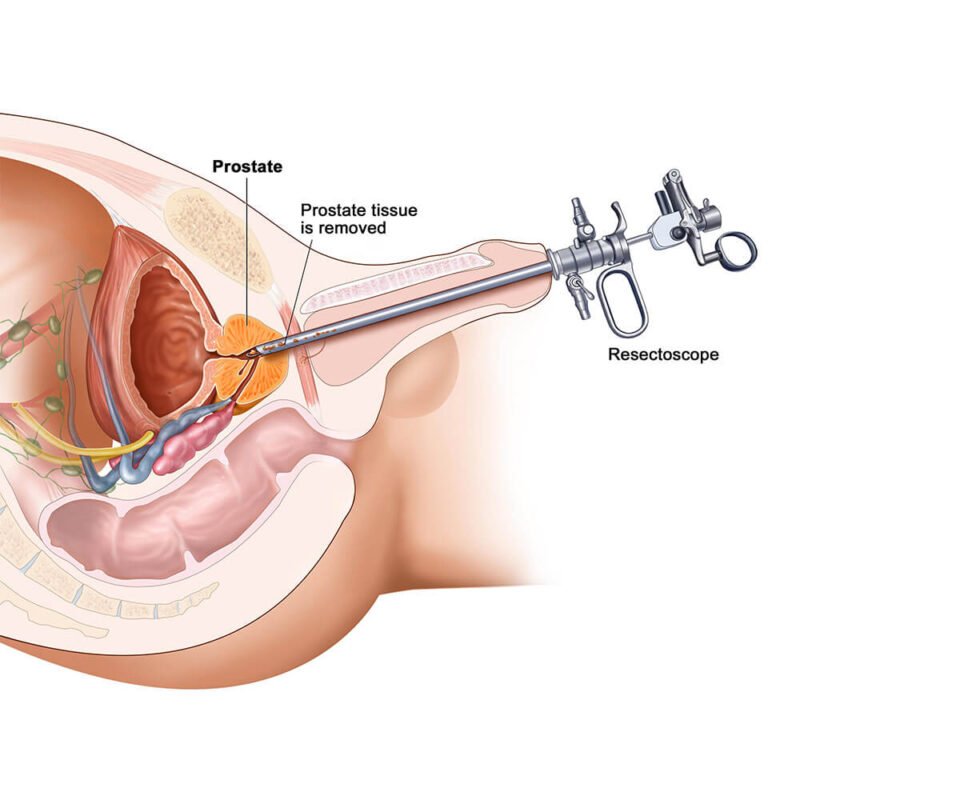
The modern gold-standard technique is HoLEP — Holmium Laser Enucleation of the Prostate. Using a slim telescope passed through the urethra, the laser precisely separates and removes the enlarged, obstructing prostate tissue, which is then cleared from the bladder. Nothing is cut on the outside of the body.

Because it removes the obstructing tissue completely rather than trimming it, HoLEP delivers a durable result for prostates of any size — including very large glands that previously required open surgery — with less bleeding and a shorter recovery than traditional methods.
Am I a candidate for laser prostate surgery?

When Laser Prostate Surgery Is the Right Choice

Tablets no longer working

Symptoms persisting or returning despite alpha-blockers and 5-ARIs — the most common reason men reach surgery.

Urinary retention

Men who cannot pass urine and are living with a catheter — enucleation offers the highest chance of catheter freedom.

Complications of obstruction

Recurrent urinary infections, bladder stones, repeated bleeding, or kidney back-pressure — signs that tablets are no longer enough.

Very large glands

Prostates of 100–150 g and beyond — traditionally sent for open surgery — are now routinely managed with enucleation.

Men on blood thinners

Cardiac stents, atrial fibrillation, valve patients — the laser's sealing effect makes surgery feasible when TURP is risky.

Men who want one definitive fix

Complete removal means most men stop taking prostate tablets for good, and re-operation over the years is uncommon.

And when it isn't

Mild symptoms managed with tablets generally don't necessitate surgery—it's reserved for cases where medication fails or complications arise, not solely based on ultrasound findings. If prostate cancer is suspected, the typical process involves initial evaluation, followed by robotic prostatectomy if surgery is deemed appropriate. BPH surgery aims to relieve obstruction, not to treat cancer
Why HoLEP

Benefits of laser prostate surgery

For most men with a bothersome enlarged prostate, laser surgery offers clear advantages over older techniques

No external incision

Performed entirely through the urethra — nothing cut on the outside.

Very little bleeding

Often the safest surgical option for men on blood-thinning medication.

Works for any size

Effective even for very large prostates that once needed open surgery.

Durable result

Complete removal of obstructing tissue means a low likelihood of repeat treatment.

Short catheter & stay

A catheter is usually in place for about a day, with a same-day or short hospital stay.

Fast symptom relief

Most men notice a stronger stream and improved bladder emptying soon after healing.
What to Expect

Your Laser Prostate Surgery Journey

01

Complete evaluation first

Symptom score (IPSS), uroflowmetry, ultrasound examining prostate size and residual urine, PSA, and physical examination are used to confirm that obstruction is the cause and that cancer is not concealed behind it. Urine must be sterile prior to surgery.
02

Anaesthesia & access

Under spinal or general anaesthesia, the telescope moves through the natural passage without any external cuts.
03

Enucleation — the peel-and-flesh separation

The laser separates the adenoma from the capsule, sealing vessels along the way, until the entire inner gland is completely free — this thorough separation characterises the procedure.
04

Morcellation & retrieval

The tissue that is freed and pushed into the bladder is removed in pieces using the morcellator. All tissue is weighed and sent for pathology analysis
05

Catheter, recovery & discharge

A catheter is used to irrigate the area overnight and usually removed within 24–48 hours. Most men notice a stronger urine stream immediately and are discharged in 1–2 days with written instructions.

Laser Enucleation vs TURP vs Open Surgery

Aspect Laser enucleation TURP Open prostatectomy

Route

Natural passage — no incision Natural passage — no incision Abdominal incision

Tissue removal

Complete — whole adenoma off the capsule Partial — tissue shaved in chips Complete

Gland size limit

None — any size Best under ~80 g None

Bleeding

Minimal — laser seals as it cuts Moderate Highest

Blood thinners

Often continued

Must stop Must stop

Catheter / stay

~24–48 hrs / 1–2 days ~2–3 days / 2–3 days

~5–7 days / about a week

Long-term regrowth

Very low Higher — partial removal Very low

The fair summary

Enucleation offers the thoroughness of open surgery while enabling same-day recovery, making it a size-independent standard for BPH according to current guidelines. TURP still serves as a suitable choice for moderate-sized glands. What has truly become obsolete is the requirement for open surgery solely because a prostate is large.

Informed Consent, Honestly

Risks & Side Effects — Yours to Know

Laser prostate surgery is considered safe and well researched, but like all procedures, it involves some trade-offs. The main ones include:

Retrograde ejaculation, which is a typical consequence of complete obstruction removal; it’s harmless, doesn’t affect sensation, but can reduce fertility and is discussed before surgery.

Some patients experience temporary urgency and burning sensations for a few weeks as the tissue heals, gradually improving.

A small percentage may experience early transient urine leakage, but pelvic floor exercises usually resolve this within weeks.

Infection and bleeding are rare, thanks to sterile techniques and the laser's sealing effect.

Late scarring causing urethral or bladder-neck narrowing is infrequent but treatable if it occurs.

Erectile function is usually maintained since the nerves responsible for erections are outside the capsule that remains intact.
Your Surgeon

Laser prostate surgery in
Chennai

Dr. A.K. Jayaraj is a Senior Consultant Urologist in Chennai with specialised endourology training, including laser prostate surgery (HoLEP). He has treated many men with enlarged prostates using this precise, low-bleeding, size-independent technique.

His focus is a durable result with the least disruption — restoring comfortable, normal urination and getting men back to daily life quickly.

Common Questions

Laser prostate surgery FAQs

Is laser prostate surgery painful?
the procedure itself is performed under anaesthesia, so you feel nothing during it. Afterwards, some men notice mild burning or urgency when passing urine for a short time as the area heals; this settles over days to a couple of weeks and is easily managed.
How long is recovery after laser prostate surgery?

Many patients go home the same day or after a short stay, usually with a catheter for about a day. Most return to light daily activities within a few days and to full activity within one to two weeks, avoiding heavy lifting and strenuous exercise for a short period.

Will laser prostate surgery affect my erections or ejaculation?

Erections are usually preserved. The most common change is retrograde ejaculation, where semen passes back into the bladder rather than out — this is harmless but can affect fertility, so it is discussed with you beforehand.

Is HoLEP better than TURP or open surgery?
HoLEP (Holmium Laser Enucleation of the Prostate) provides the same relief as TURP but with less bleeding. It works for prostates of any size — including very large glands that once required open surgery. It is durable, with a low likelihood of needing repeat treatment.
Can I have laser prostate surgery if I take blood thinners?
Because laser surgery causes very little bleeding, it is often a safer option for men on blood-thinning medication than traditional surgery. Your medication is carefully reviewed and planned around the procedure.
Related

Related conditions & treatments

Condition

Enlarged Prostate (BPH)

Condition

Prostate Cancer

Procedure

Robotic Prostatectomy (RARP)

Condition

Urinary Tract Infection

Pillar

Robotic Surgery Overview

About

Dr. A.K. Jayaraj

Book a Consultation

Book a consultation for laser prostate surgery

Find out whether laser prostate surgery is right for you — bring any flowr
tests, PSA results or scans for a clear, unhurried discussion of your
options.