

Mini PCNL for
Large Kidney Stones
in Chennai
Keyhole surgery for large, staghorn and complex kidney stones a small (~1 cm) tract clears big stones in a single session, with less bleeding than standard PCNL and a quicker recovery than open surgery.
Mini PCNL - Keyhole Surgery for Large Kidney Stones
Mini PCNL (mini percutaneous nephrolithotomy) is a procedure that removes large or complex kidney stones via a single small incision in the back, offering a high rate of stone clearance.Mini PCNL (mini percutaneous nephrolithotomy) is a procedure that removes large or complex kidney stones via a single small incision in the back, offering a high rate of stone clearance.
A narrow approximately one-centimetre tract allows a slim telescope to access the kidney directly, enabling a laser or pneumatic device to break the stone for removal. The "mini" tract results in less bleeding compared to standard PCNL but retains the ability to clear large stones in a single session.A narrow approximately one-centimetre tract allows a slim telescope to access the kidney directly, enabling a laser or pneumatic device to break the stone for removal. The "mini" tract results in less bleeding compared to standard PCNL but retains the ability to clear large stones in a single session.
This technique is preferred for large and staghorn stones that cannot be managed with scope and laser methods through the natural passage.
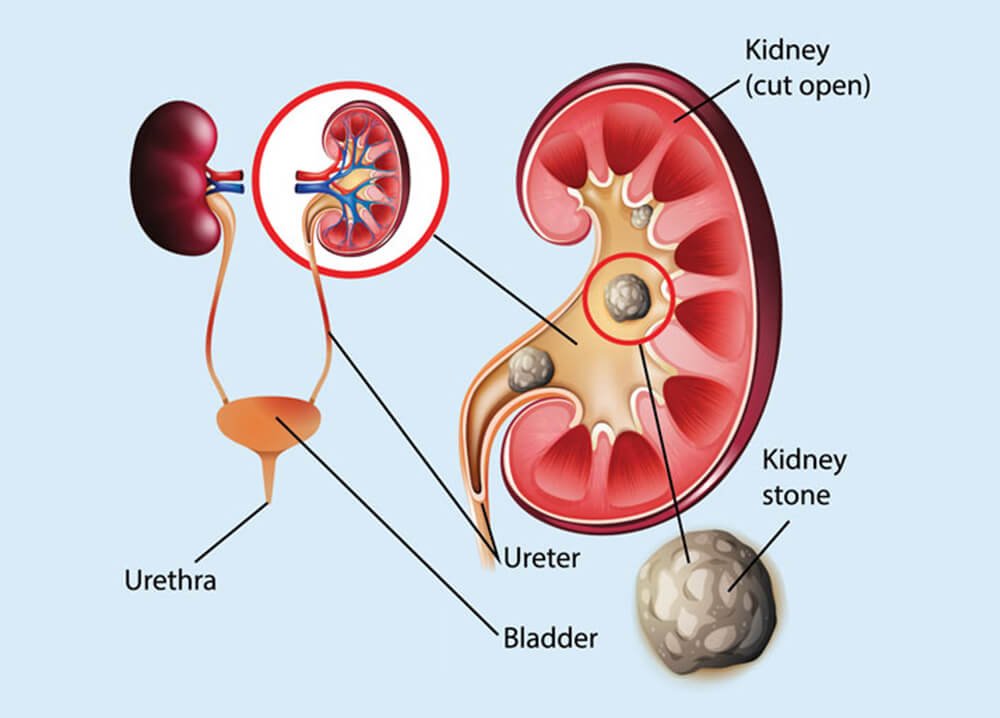
Benefits of mini PCNL
Clears large stones
High single-session clearance for big and staghorn stones.
Small keyhole
About a 1 cm tract, far smaller than open surgery.
Less bleeding
The mini tract reduces bleeding compared with standard PCNL.
Effective & durable
Thorough stone removal lowers the chance of leftover fragments.
Short stay
Usually a couple of days in hospital.
Faster recovery
A quicker return to normal than open stone surgery.
Am I a candidate for mini PCNL
Stones Larger than 2 cm
The guideline-recommended first choice above this size a single operation
Staghorn stones
About a 1 cm tract, far smaller than open surgery.
Complex / multiple
The mini tract reduces bleeding compared with standard PCNL.
Not suited to RIRS
When a scope-and-laser approach cannot clear the stone.
Anatomical challenges
Selected rare anatomies where the natural passage is obstructed or unsuitable.
And when it isn't:
For stones smaller than about 2 cm, RIRS typically clears them without the need for an incision and is usually the gentler initial option. Patients on blood thinners generally must stop them for mini PCNL, as the puncture requires this. If anticoagulants cannot be paused, RIRS is often safer. Ultimately, your CT scan helps determine the best approach, and the results are explained to you using your own images.
The procedure & your recovery
Assessment
A CT scan maps the stone and plans the safest tract.
Access
A small keyhole tract is made into the kidney under imaging guidance.
Stone removal
The stone is fragmented and removed through the tract.
Drainage
Recovery
A short hospital stay; light activity within days, full activity in 1–2 weeks.
Mini PCNL in Chennai
Dr. A.K. Jayaraj is a Senior Consultant Urologist in Chennai with specialised endourology training and extensive experience in mini PCNL for large and complex kidney stones. He aims for complete, single-session clearance with the least possible disruption.
For every stone, he chooses between RIRS, ureteroscopy and mini PCNL to give the safest, most effective result.
- Mini PCNL for large stones
- High stone-clearance focus
- Endourology-trained urologist
- 20+ years of surgical experience

Frequently asked questions
The principle is identical a tract through the back into the kidney but mini PCNL miniaturises the entire instrument set, so the tract is roughly half the size, barely the width of a pen. That means less bleeding, less pain, often no external tube, and a shorter stay while retaining the single-sitting clearance that makes PCNL the standard for large stones.The principle is identical a tract through the back into the kidney but mini PCNL miniaturises the entire instrument set, so the tract is roughly half the size, barely the width of a pen. That means less bleeding, less pain, often no external tube, and a shorter stay while retaining the single-sitting clearance that makes PCNL the standard for large stones.
Mini PCNL is generally reserved for larger kidney stones (usually over 2 cm), staghorn stones that occupy the kidney's collecting system, and complex or multiple stones where achieving high clearance in a single session is crucial.
only a very small one, the keyhole tract is about a centimetre. This is far smaller than the large incision used in traditional open stone surgery.
Most patients remain hospitalised for a few days. A brief placement of a small drainage tube (nephrostomy) or a stent might be necessary. Light activities can be resumed within days, and full activity typically returns within one to two weeks.
The procedure removes existing stones but does not alter the underlying chemistry that causes their formation. Without preventive measures, roughly 50% of patients may experience recurrence within 5-10 years. Therefore, each case concludes with stone analysis and a tailored prevention strategy, including fluid intake goals, dietary modifications with familiar South Indian foods, and metabolic testing for those prone to recurrence.
Related conditions & treatments
Large Kidney Stone?
Book a Consultation Now
clear a large or complex stone in a single session.