
Kidney Stone Treatment
in Chennai
Expert laser and keyhole treatment for kidney and ureteric stones clearing stones of any size, mostly through the natural passage with no incision, plus a plan to stop them coming back.
Understanding kidney stones
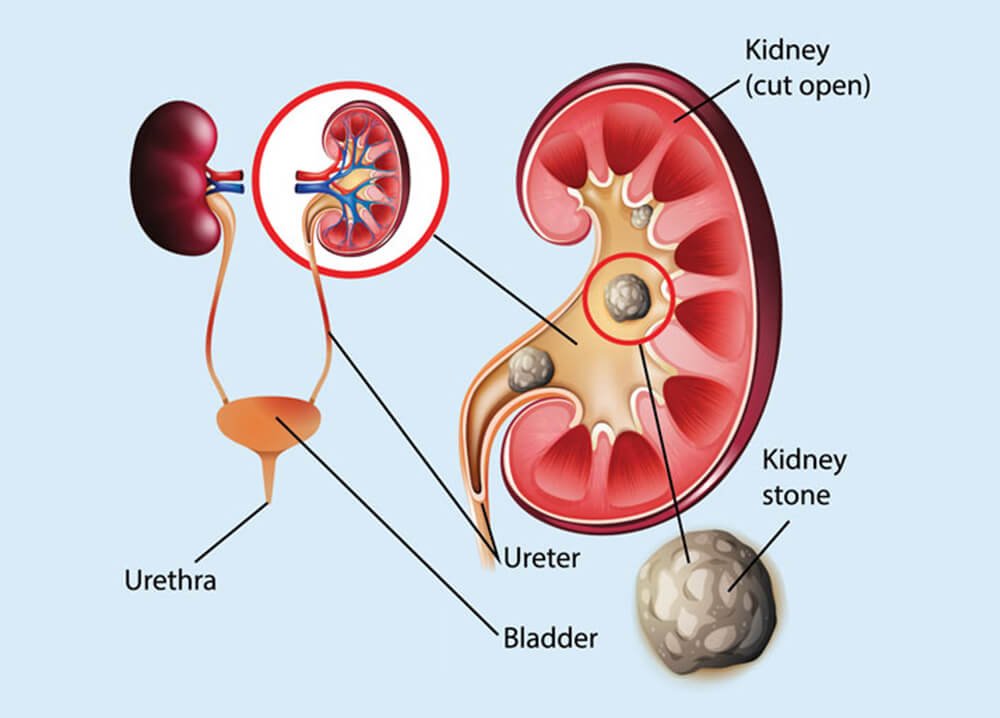
Kidney stones are hard deposits of minerals and salts that form inside the kidneys common, often very painful, and today treated mostly through the natural passage without any incision.
A stone can sit quietly in the kidney for years, or cause sudden, severe pain (renal colic) when it moves into the ureter and blocks the flow of urine. Stones are especially common in hot climates like Chennai, where fluid loss concentrates the urine.
The good news is that modern endourology means most stones can be cleared with a thin scope and laser as day-care or a short stay and the same care includes preventing new stones from forming.
Symptoms of kidney stones
Symptoms usually appear when a stone moves and blocks the flow of urine:
Severe flank pain
Sharp or cramping pain in the side or lower back that can radiate to the groin (renal colic).
Blood in urine
Pink, red or brown urine as the stone irritates the urinary tract.
Painful, frequent urination
Burning or a persistent urge, especially as a stone nears the bladder.
Nausea & restlessness
Nausea or vomiting, and an inability to find a comfortable position.
Seek urgent care if
A kidney stone with fever, chills or shaking is an emergency it can mean an infected, blocked kidney and needs treatment the same day. Inability to pass urine, uncontrollable vomiting or severe unrelenting pain also warrant urgent review.
What Causes Kidney Stones?
Not enough fluid
Low water intake and a hot climate concentrate the urine the biggest factor.
Diet
High salt, high animal protein and oxalate-rich foods can promote stones.
Body & family history
Obesity, a family tendency, and some medical conditions or medicines raise risk.
Previous stones
Once you have had a stone, the chance of another is higher without prevention.
How kidney stones are diagnosed?
CT KUB
A low-dose CT scan is the most accurate test to confirm a stone, its size and position.
Ultrasound
Urine & blood tests
Stone analysis
How kidney stones are treated
cleared through the natural passage.
Fluids & medication
RIRS (Laser Kidney Stone Surgery)
A flexible scope and laser clear kidney stones through the natural passage no cut.
Mini PCNL
Keyhole surgery through a small (~1 cm) tract for large or staghorn stones.
Ureteroscopy (URS)
A thin scope and laser treat stones stuck in the ureter, with no incision.
Expert kidney stone care in Chennai
Dr. A.K. Jayaraj is a Senior Consultant Urologist in Chennai with specialised training in endourology — the laser and keyhole treatment of kidney stones. He treats stones of all sizes, from a small ureteric stone to a large staghorn, choosing the least invasive effective option for each patient.
His care also focuses on prevention, so patients are less likely to form new stones in the future.
- Laser stone surgery (RIRS)
- Endourology-trained urologist
- Mini PCNL for large stones
- 20+ years of surgical experience

Frequently asked questions
Yes. Most kidney and ureteric stones today are treated through the body's natural urinary passage using a thin scope and laser (RIRS or ureteroscopy) with no cut on the outside. Larger stones may need a small keyhole (mini PCNL). Very small stones often pass on their own with fluids and medication.
Drinking enough water to keep the urine pale is the single most effective step, especially in a hot climate like Chennai. Reducing salt, moderating animal protein and oxalate-rich foods, and for repeat stone formers a simple metabolic evaluation to find the cause all help lower the chance of new stones.
Small stones causing little trouble may simply be watched while they pass. Treatment is advised when a stone is large, causing severe or ongoing pain, blocking the kidney, causing infection or bleeding, or not passing on its own. A stone with fever is a medical emergency and needs urgent care.
It can be a stone moving into the ureter causes renal colic, a severe, cramping pain in the side that may radiate to the groin, often with nausea. Good pain relief and, where needed, a minor procedure can manage this quickly.
Related conditions & treatments
In pain from a kidney stone? Book a consultation
invasive way to clear your stone — and how to prevent the next one.